
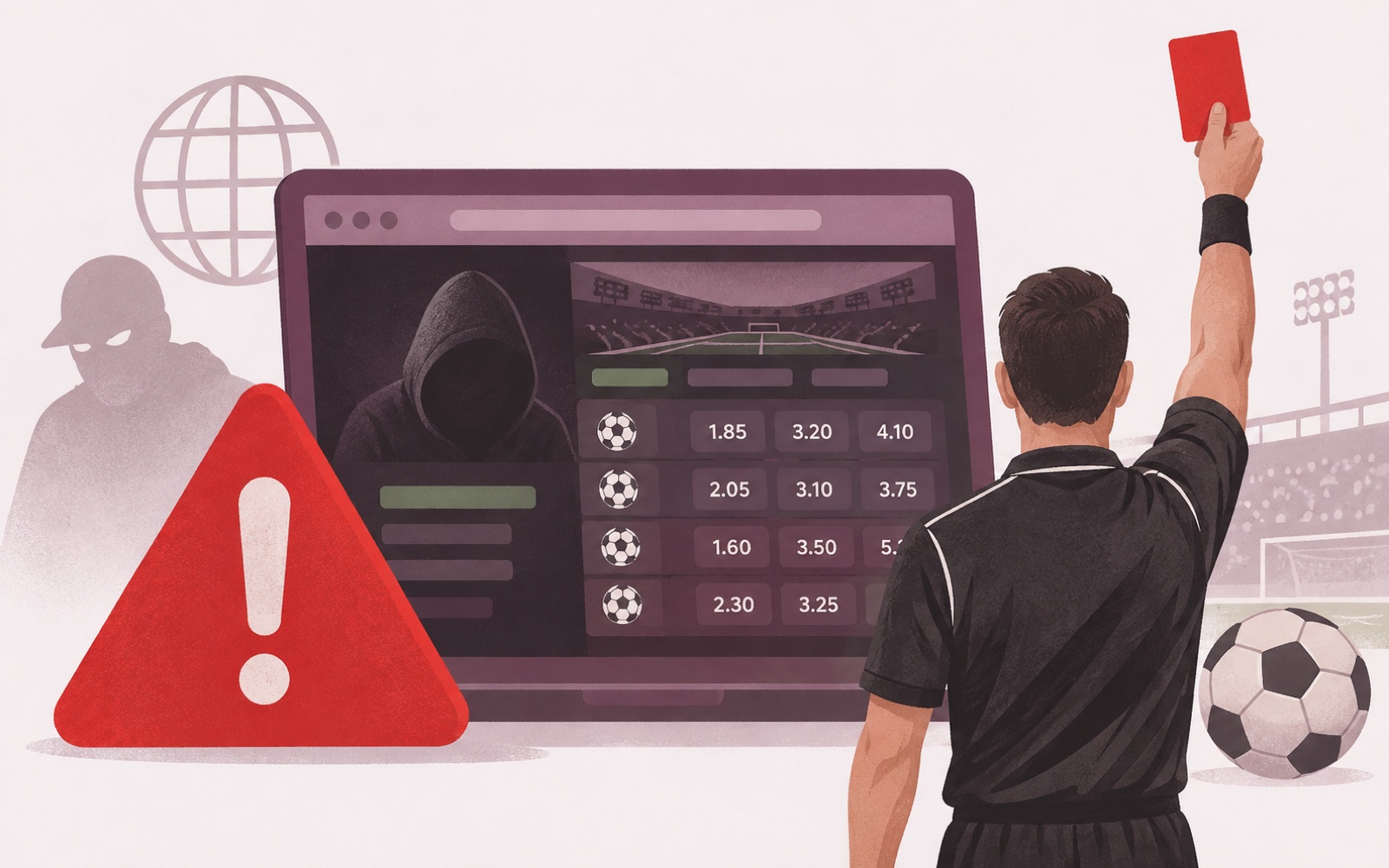
Unsafe betting sites rarely announce themselves, but they leave clues, and once you know the pattern it is hard to miss. Some signs concern the operator's honesty, such as a missing licence or stalled withdrawals, while others concern how a site treats your wellbeing, such as pressure to deposit and hidden safer-gambling tools. Both matter.
If reading this stirs up worry about your own gambling, that feeling is worth listening to. Free, confidential support is available day and night from the GamCare National Gambling Helpline on 0808 8020 133.
01
No licence you can actually verify
The first and most serious warning sign is a licence you cannot confirm. Only operators on the UK Gambling Commission's public register may lawfully offer betting to customers in Britain, and a logo or number in a site's footer is a claim, not proof. Search the register by the exact domain you are using, and if there is no clear match, stop there.
Be especially wary of sites leaning on overseas licences or offering no checks at all, since both mean you lose UK consumer protection and access to GAMSTOP. Our licence check guide walks through the register step by step, and you can report an unlicensed operator to the Gambling Commission.
02
Pressure, urgency and hard selling
Safe sites do not need to rush you. Countdown timers on offers, constant prompts to deposit more, and messages that reappear after you try to stop are all designed to override your judgement. A site that makes it easier to keep betting than to take a break has arranged its priorities against you.
Pay attention to how a site behaves when you slow down. If pausing triggers a wave of bonuses and reminders rather than a clear route to a time-out, treat that as a sign to leave. Pressure is a design choice, and it tells you what the operator values.
A common example
You decide to stop for the night and immediately receive a "just for you" free-bet notification with a short expiry. That timing is not a coincidence; it is engineered to pull you back in at the exact moment you were being sensible. Recognising it for what it is makes it far easier to ignore.
03
Bonus terms that trap rather than reward
A bonus should be clear enough to understand in a minute. Warning signs include vague or buried terms, very short expiry windows, high minimum odds and pressure to deposit quickly to qualify. Since 19 January 2026, wagering requirements are capped at ten times the bonus and mixed sportsbook-and-casino promotions are banned, so an offer that ignores those limits is a red flag in itself.
The deeper problem with trap-style offers is behavioural. They are built to make you bet more, and faster, than you intended, which is exactly the pattern that leads to harm. If an offer is steering your decisions, the safest move is to walk away from it.
| What to check | Why it matters | Where |
|---|---|---|
| UKGC licence | Legal to serve UK, dispute route | Public register |
| Safer-gambling tools | Limits, time-outs, self-exclusion | Account settings |
| Payment terms | Debit only, clear withdrawal times | Banking page |
04
Withdrawals that stall, block or add conditions
How a site pays out is one of the truest measures of its character. Warning signs include withdrawals that are far slower than deposits, surprise conditions attached to your own money, repeated requests for documents you already sent, or minimum balances that keep funds trapped in play. Money should be as easy to take out as it was to put in.
The most common honest delay is unfinished identity verification, which is why completing checks at sign-up matters. Beyond that, a licensed site that stalls without explanation is one to escalate through its complaints process and the independent dispute service it names. Our payments guide covers typical timings.
Key points
- No verifiable UKGC licence is the single most serious warning sign; check the register, not the footer.
- Pressure to deposit and offers timed to when you try to stop are red flags, not perks.
- If a site markets itself as a way around GAMSTOP, avoid it, and use the free tools at BeGambleAware if you feel tempted.
05
Credit cards or unusual ways to pay
Because credit-card gambling has been banned in Britain since April 2020, any site accepting credit cards for betting is not following UK rules, full stop. Be equally cautious of sites that push obscure payment methods, ask you to send money to a personal account, or make it hard to see where your funds are going. Legitimate licensed sites keep payments transparent.
Unusual payment routes do more than raise fraud risk; they also increase the distance between you and a clear view of your spending, which works against staying in control. If a site's payment page feels evasive, that is reason enough to leave.
A common example
A site suggests you top up through an unfamiliar voucher or send a transfer to an individual rather than a company account. Both take your money outside normal, traceable channels and outside any consumer protection, and either one is a clear signal to stop and walk away.
06
Weak or hidden safer gambling tools
On a properly run site, deposit limits, time-outs, reality checks and self-exclusion are easy to find and quick to use. Warning signs are the opposite, tools buried several menus deep, limits that are awkward to set, or nudges to remove a limit after a loss. If it is harder to protect yourself than to keep betting, the design is working against you.
A quick test tells you a lot. Try to find the deposit limit within a minute of opening the account settings. If you cannot, or the site steers you away from it, that imbalance is a reason to choose somewhere that puts these controls front and centre, as our safer gambling guide explains.
07
What to do if something goes wrong
If you think you have used an unsafe or unlicensed site, act calmly and methodically. Stop depositing, take screenshots of your account and any messages, and try to withdraw your balance. Ask your bank to apply a gambling block, and report an unlicensed operator to the Gambling Commission. For a licensed site that has treated you unfairly, use its formal complaints process and then the independent alternative dispute resolution provider it names.
Keep a written record of dates, amounts and correspondence throughout, as it makes any complaint far stronger. Above all, look after yourself. If the experience has left you anxious or you are worried about your gambling more broadly, you can talk it through free and in confidence with GamCare on 0808 8020 133, at any hour.
Related reading on this site
- Choosing a betting site, step by step
- Checking a site's UKGC licence
- How odds and value really work
- Deposits, withdrawals and the credit ban
- Deposit limits, time-outs and GAMSTOP
How we check our facts
This guide draws on licensing and enforcement information from the Gambling Commission, and on consumer support from GamCare. The credit-card ban and bonus rules were last checked on 25 September 2026.

Frequently asked questions
What is the clearest single sign that a betting site is unsafe?
No verifiable UK Gambling Commission licence. If you cannot find the exact site on the Commission's public register, treat everything else as unreliable, because you have no enforceable protection and no independent complaints route. Badges and licence numbers printed in a footer can be copied, so always check the register itself rather than the site's own claim. If a site cannot be verified, do not deposit, and if you feel pulled to anyway, call GamCare free on 0808 8020 133.
A site says it accepts customers who have self-excluded elsewhere. Is that a good thing?
No, it is one of the strongest warning signs there is. Any site marketing itself as a way around GAMSTOP or as welcoming self-excluded players is deliberately undermining a protection you or someone else put in place, which means it is not licensed in Britain and offers you no consumer safeguards. The healthiest response is to close the tab. If you have self-excluded and feel tempted to seek out such a site, that urge is worth talking through with GamCare on 0808 8020 133.
How can I tell trap-style bonus terms from a fair offer?
Read the conditions before the headline. Fair offers state the qualifying stake, minimum odds, expiry and any wagering requirement plainly, and since 19 January 2026 wagering is capped at ten times the bonus with mixed product promotions banned. Warning signs include vague or hidden terms, very short expiry windows, and pressure to deposit quickly to unlock a bonus. If an offer is pushing you to bet more or faster than you planned, it is working against you, not for you.
I think I have used an unsafe or unlicensed site. What should I do now?
Stop depositing, take screenshots of your account and any communications, and try to withdraw your balance. Contact your bank about a gambling block, and if the site is unlicensed, report it to the Gambling Commission. For a licensed site that has treated you unfairly, use its complaints process and then the independent alternative dispute resolution provider. Keep a written record throughout. If the experience has left you anxious, free confidential support is on GamCare's helpline, 0808 8020 133.